
You know your business has something worth sharing. You have people on the team with valuable insights, a perspective on your industry and a story that deserves to be heard. So why are your competitors appearing in the press while your business struggles to get noticed?
It’s a common frustration for businesses considering investing in PR. You see competitors quoted in industry publications, featured in the news or sharing media coverage on LinkedIn, and wonder what they’re doing differently.
The answer isn't necessarily that they have a bigger budget, a better product or more to say. Often, the difference lies in how effectively they turn their expertise into storytelling that matters, to journalists and their audiences.
The right media coverage can do more than raise awareness. It can build credibility, strengthen your market position and help your business become a recognised voice in its sector. But achieving that takes more than issuing press releases or pitching the occasional news piece.
From finding the right story to building lasting media relationships, there are several reasons your PR might not be delivering the visibility you want and some practical steps you can take to change that.

You’re talking about your business, not the story
One of the most common PR mistakes is focusing too heavily on what a business wants to announce, rather than what an audience would want to hear.
A new appointment, product launch or company milestone might be news, but that doesn’t automatically make it newsworthy. Journalists need a reason to cover a story, whether that’s new information, a fresh perspective, a wider industry trend or something that matters to their readers.
That means looking beyond the announcement itself. What does it tell us about your sector? Does it reflect a wider change in the market? Can you offer insight into a challenge your customers are facing?
The strongest PR stories connect what your business knows with what its audience wants to understand.
Finding the right angle isn't always straightforward, particularly when you're close to your own business. An external PR perspective can help you identify the stories that will resonate with journalists and turn company news into meaningful media opportunities.

You’re targeting the wrong journalists
Getting your story in front of a journalist is only useful if it reaches someone who has a reason to cover it.
Sending the same press release to a long list of contacts might feel productive, but it can mean missing the journalists who are actively looking for stories like yours. The most relevant contact isn't always the most obvious one either. A journalist might cover your sector broadly, but another could be writing about a specific trend, challenge or development your business can speak to.
Effective media relations means looking beyond publication names and building an understanding of what individual journalists are interested in, the beat they're currently covering and where your expertise could add something new to the conversation.

It also means recognising that the same story can have different angles for different audiences. A business announcement might be more compelling to a trade journalist when framed around its impact on the industry, while a national journalist may be more interested in the wider consumer or economic implications.
The goal isn't to contact more journalists. It's to identify the right opportunities and give each journalist a relevant reason to take notice.

You’re not giving journalists a compelling reason to cover you ‘now’
Even a relevant story needs the ‘why now’, a reason to be covered at a particular moment.
Journalists are working to deadlines and responding to a constant flow of news. If your pitch doesn’t explain why the story matters now, it can easily be overlooked in favour of something more timely. This is one of the biggest causes of frustration. How many times have you asked yourself, “why did their story get coverage but ours didn’t” when they are practically the same… it’s timing and why now!
This is where understanding the wider news agenda becomes important. Is there a new regulation affecting your industry? Are changing customer behaviours creating a fresh challenge? Is a major announcement prompting questions your business can help answer?
Businesses with a proactive approach to PR look for ways to contribute to these conversations before the opportunity passes. Rather than waiting until they have company news to share, they identify relevant trends and prepare useful insights that journalists can draw upon.
Staying visible in the media takes more than reacting when something happens. A proactive PR strategy helps you plan ahead, spot relevant opportunities and connect your expertise to the conversations that matter to your audience. Don’t however confuse this with more volume! It’s still strategic and controlled.
At Rosely Group, our in-house industry intelligence, powered by our proprietary Ascribd platform, helps us identify emerging trends, spot relevant news hooks and anticipate media opportunities, enabling us to position clients' expertise at the right time.

Your pitch makes journalists work too hard
Journalists receive a high volume of pitches, often while working to tight deadlines. If they have to dig through a long email to understand the story, establish why it matters or find the information they need, they may simply move on.
A strong pitch gets to the point quickly. It explains the story, why it’s relevant to that journalist and what you can offer, whether that’s an expert comment, original data, an interview or a useful case study.
Supporting information should be easy to access, spokespeople should be available and any claims should be backed up with credible evidence.
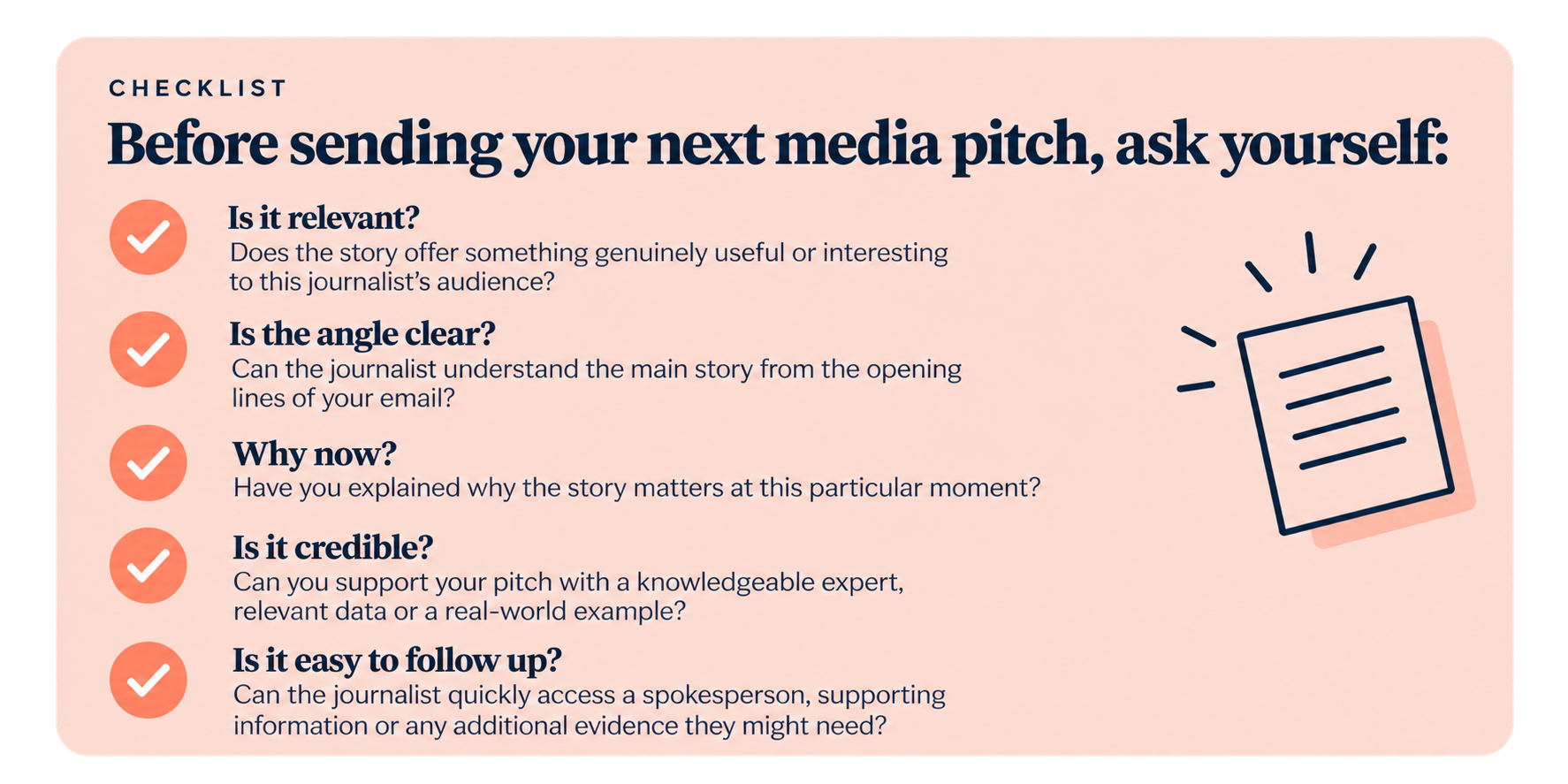
If you can answer yes to all five, you’re giving your pitch a stronger chance of getting noticed.
The aim isn’t to tell the journalist everything about your business. It’s to make it as easy as possible for them to see the value of the story and decide whether it’s right for their audience.
This is where clear messaging, thoughtful preparation and an understanding of what journalists need can make a difference.

You’re not making enough of your expertise
Your business doesn’t need a major announcement every week to have something valuable to contribute.
Specialist knowledge, industry experience and informed opinions can all provide opportunities for coverage. Journalists regularly need credible voices who can explain developments, offer context or comment on the issues affecting their readers.
Yet many businesses only approach the media when they have something to announce. This means they miss opportunities to build relationships and establish their people as useful sources of insight. These relationships and brand awareness help hugely when the company news does come along too!
Think about the questions your customers ask, the changes you’re seeing in your industry and the subjects on which your team has a genuinely informed perspective. These can all provide the starting point for thought leadership, expert commentary and contributed articles.
Over time, this approach can help build recognition and credibility, making your business a more familiar and useful voice for journalists to turn to.


You’re treating PR as a series of one-off announcements
A press release can be useful, but it shouldn’t be the entirety of your PR strategy.
If your business only approaches the media when it launches a product, wins an award or announces a new appointment, you’re relying on a limited number of opportunities to stay visible.
Consistent media coverage is more likely to come from a broader approach that combines company news with expert commentary, thought leadership, proactive pitching and relevant responses to industry developments.
It also takes time to build relationships and establish your business as a credible source. Not every pitch will lead to coverage, and not every story will be right for every publication. Reviewing what works, learning from what doesn’t and adapting your approach are all part of the process.
PR is most effective when it supports your wider business objectives, rather than operating as a collection of disconnected announcements. We develop PR programmes around our clients' objectives, combining planned activity with reactive opportunities to build a more consistent and relevant media presence over time.
How to work out what’s holding your PR back
If your competitors appear to be getting more coverage, the first step is to look at the evidence rather than make assumptions.
Review the publications and journalists covering your sector. What types of stories are they publishing? Which businesses are being quoted, and what expertise or information are they providing? Are there themes or conversations your business could contribute to?
It’s also worth looking at your own PR activity. Are your stories relevant to the audiences you want to reach? Are you targeting the right contacts? Do you respond quickly enough to opportunities? And are you measuring success in terms of meaningful coverage and business objectives, rather than simply the number of press releases issued?
A competitor coverage audit can help reveal gaps in your approach and identify opportunities you may be missing. It can also help you distinguish between areas where your strategy needs to change and situations where a story simply wasn’t right for a particular journalist or publication.

Turn your expertise into meaningful media coverage
If your competitors are getting the coverage you want, the answer isn't necessarily to send more press releases. It's to understand what makes their stories relevant, where your own in-house expertise can add value and how to build a more consistent presence in the media.
Effective PR is about more than securing media coverage. It’s about reaching the audiences that matter to your business, building credibility and strengthening your market position. When approached strategically, media coverage can help establish your leadership team as trusted voices in your sector, build confidence among prospective customers, partners and investors, and support your wider business objectives.